the idea behind The Grand Matriarchy (Book 1)
The one-line idea: The grandmother-centered family isn’t a relic from a sepia photograph. Somewhere right now — this ordinary Tuesday — it is running exactly as it always has. The question isn’t whether it still works. It’s why we walked away from the thing that does.
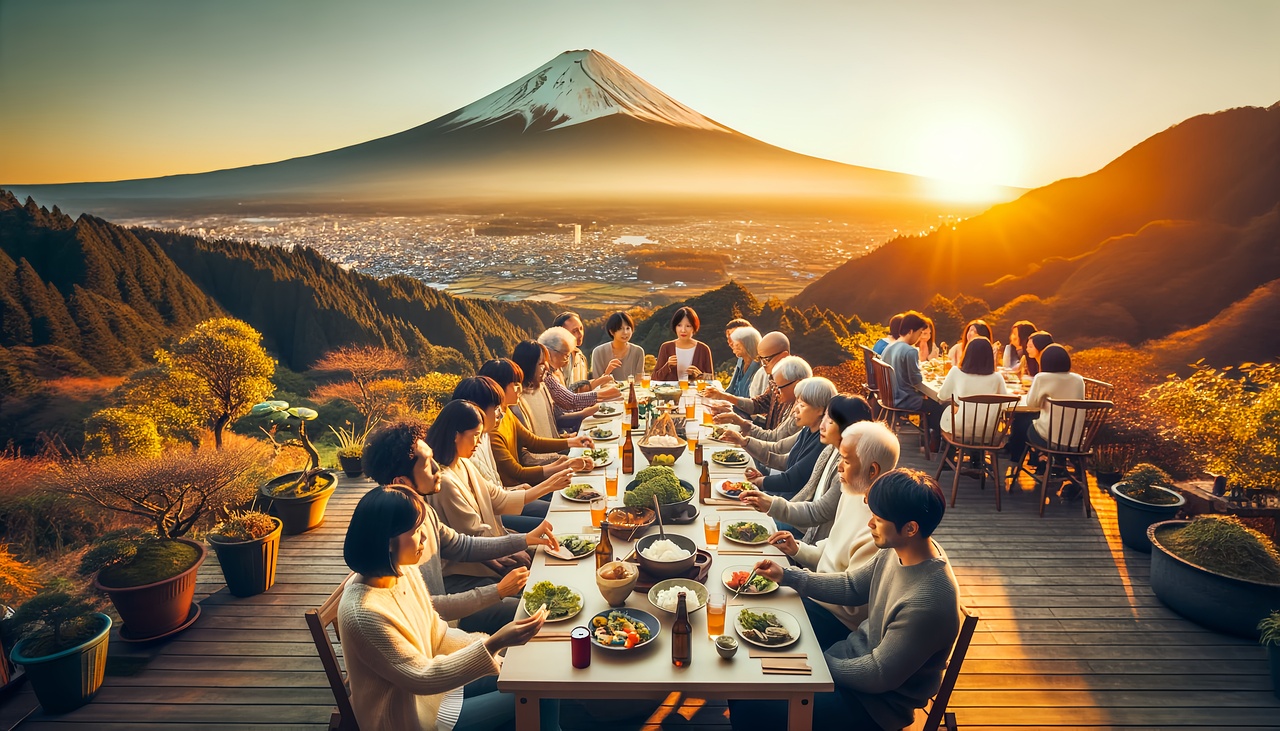
Not a holiday. A Tuesday.
We picture the extended family as something that happens on Thanksgiving — a big table, once a year, negotiated by group text since September. But the family structure this book is about doesn’t live on the holidays. It lives on the Tuesdays: the ordinary weekday when the grandmother is simply there, and the network moves around her without anyone planning it.
In a house in Metro Manila, two kitchens share a window that stays open except when it rains. Through it pass food, borrowed pots, conversation, and a grandson who has learned that Lola’s kitchen has better snacks. Nobody scheduled any of it.
“The bandwidth of two women who have been conducting their lives through this opening for eighteen years.”
It still thrives — and not because people are poor
The easy dismissal is that three-generation families only hold together where people can’t afford to scatter. The evidence says otherwise.
Who lives with extended family
Approximate. Source: figures cited in the Grand Matriarchy (GM) bibliography.
When families with every option to disperse choose to stay within a kitchen window of each other, that choice is telling you something the economics alone can’t explain.
The structure survives where it survives because the people inside it recognize what it’s worth.
What it costs to lose it
The other side of the Tuesday is a country that fully adopted the opposite model. Japan modernized fast and scattered its three-generation households — and now has a word, kodokushi, “lonely death,” for the thousands of elderly who die alone each year and aren’t found for days.
The grandmother didn’t just make holidays warmer. Her ordinary Tuesday presence was the structure that caught people before they fell through.
You could start one this week
The village isn’t a place you have to be born into. It’s a function you can rebuild — and it starts smaller than you think:
- A standing weekly call that happens on the same day, every week, whether or not there’s news.
- A family group chat that carries the small stuff — a meal, a view from a window, the dog doing something foolish — the modern kitchen window, stretched across whatever distance separates you.
- One recurring table where the same people show up on purpose.
Structure is just a good thing that happens on a schedule instead of by accident.
Where this comes from — and where to go next
This is one idea from Book 1, The Grand Matriarchy — which traces what families lost when the grandmother-centered structure dissolved, why the loss is measurable, and how to build it back on modern terms, by deliberate design.
This is one idea from The Grand Matriarchy. Read the book:
Hear the ideas on the podcast — the Grand Matriarchy / Daisy podcast →
See the research behind the books →