the idea behind The Grand Matriarchy (Book 1)
The one-line idea: You are not the first species to depend on an old female who no longer breeds. Killer whales do. Elephants do. Even forests, in their own way, do. The grandmother isn’t a human sentimentality — she’s one of the oldest survival strategies life keeps reaching for.
(The number in the title is a provocation, not a measurement — but the pattern behind it is real, and far older than us.)
Killer whales: the pod follows the one who remembers
Orcas are one of the very few species besides humans where females live long past their fertile years. That turns out not to be an accident. In lean times, the pod follows the oldest female — because she is the one who remembers where the food was the last time it was this scarce.
“Post-reproductive female orcas lead their pods to food sources, especially in years of scarcity. Their death significantly increased the mortality risk of their adult offspring.”
Current Biology (2015)
Her value isn’t that she does the most. It’s that she knows the most, and the group organizes around that knowledge.
Forests: the mother tree feeds the network
Look down instead of out and the same shape appears underground. A forest isn’t a crowd of solo trees — it’s a network, and the largest, oldest trees act as hubs.
When one tree is stressed, the surrounding trees send resources toward it through the network. The network is more resilient than any single tree because it has redundancy built into its architecture.
A village with redundancy holds where a solo caregiver breaks. The forest figured that out a very long time ago.
Elephants: the herd is only as old as its matriarch
And the pattern most people already picture: elephant herds are led by the oldest female, the matriarch, whose decades of memory — of water, of danger, of routes — are the herd’s survival library. Lose her, and the herd loses not a member but its accumulated knowledge. (This is the well-known matriarch pattern; the book uses it as illustration alongside the cited orca and forest research.)
What all three share: the elder female is the memory
Across whales, elephants, forests, and us, the same design keeps recurring: a long-lived elder — usually female, usually past reproduction — becomes the keeper of the knowledge the group needs when things get hard. Not the loudest, not the busiest. The one who remembers, and around whom the network organizes.
In humans, the science has a name — the grandmother hypothesis: post-reproductive women survived because their knowledge and care measurably improved the survival of their grandchildren (Hawkes et al., 1998). We didn’t invent the grandmother. We inherited her, from a lineage far older than culture.
Where this comes from — and where to go next
This is one idea from Book 1, The Grand Matriarchy — which lays out the real science of why the grandmother function evolved, across species and in us, and what happens to a species that stops honoring it.
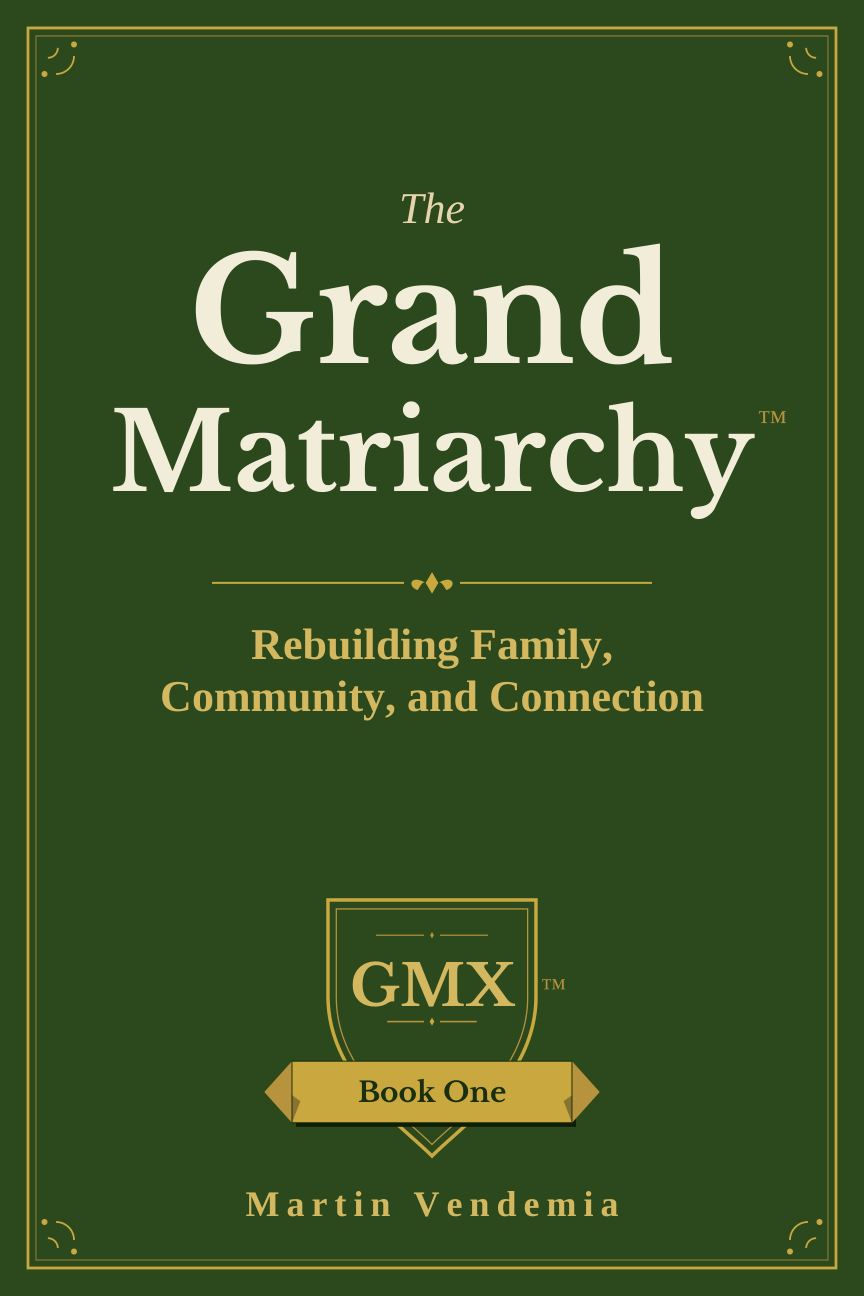
This is one idea from The Grand Matriarchy. Read the book:
Hear the ideas on the podcast — the Grand Matriarchy / Daisy podcast →
See the research behind the books →